
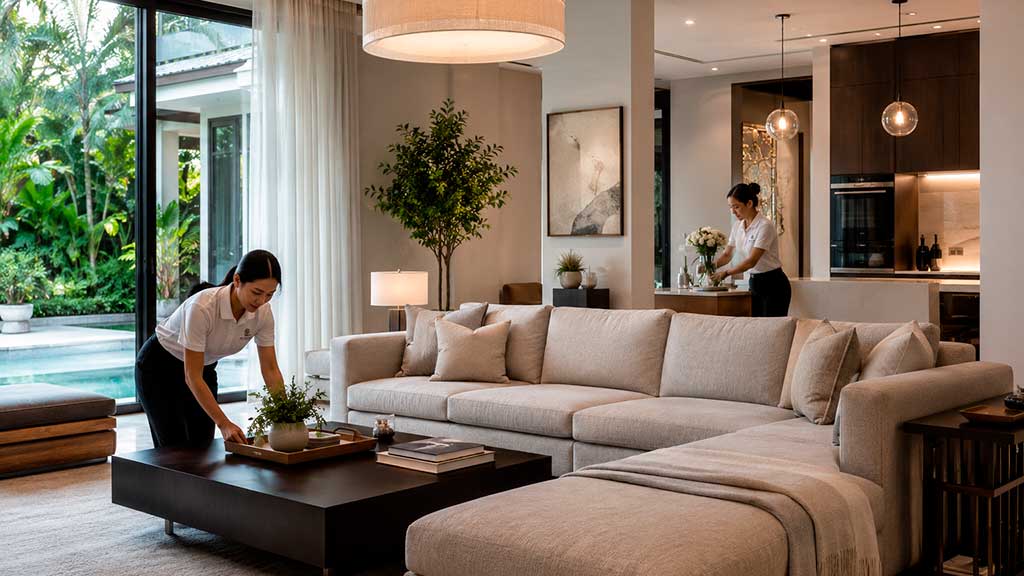
The home is traditionally conceived as a physical refuge, a bounded space that shields us from external inclemencies and defines our privacy. However, environmental psychology and contemporary neuroscience have shown that the dwelling is, in reality, an extension of our psychic system. The visual, olfactory, and structural stimuli of our immediate surroundings send constant signals to the brain, shaping our mood, our energy levels, and our capacity for emotional recovery. When a residence suffers from organizational friction, accumulation of pending tasks, or visual clutter, the brain interprets it as a hostile or unfinished environment. This triggers the chronic production of cortisol, the stress hormone. Conversely, a home managed under standards of excellence transforms into a catalyst for mental health and emotional stability.
The neurobiology of domestic chaos versus invisible order
The relationship between physical space and brain chemistry is direct. Clutter and lack of maintenance are not merely aesthetic problems; they are cognitive stressors that saturate our processing capacity.
-
Cognitive overload caused by competing visual stimuli
The human brain constantly processes the environment to ensure safety and predictability. When a room presents out-of-place objects, neglected surfaces, or accumulated maintenance tasks, the visual system suffers an overload. Each disorganized element acts as an unconscious reminder of “pending tasks,” competing for our attentional resources. This excessive and unnecessary stimulation drains mental energy before the individual even begins their professional or personal activities, limiting their cognitive clarity and daily performance.
-
Chronic cortisol and its impact on the family immune system
Studies in spatial psychology reveal that individuals who describe their homes as cluttered or stressful show persistently elevated cortisol levels throughout the day. Chronically high cortisol not only perpetuates an underlying state of anxiety and irritability, but it also suppresses the immune system, disrupts sleep cycles, and hinders digestion. Flawless domestic management, such as that provided by personnel selected by Luxury Philippines D.S. Agency, eliminates these micro-stressors, allowing hormonal levels to drop to their optimal baseline values.
-
The concept of the “psychological sanctuary” in high-performance life
For professionals facing high-pressure corporate or business environments, the home must strictly fulfill the function of a decompression sanctuary. If upon crossing the threshold of the dwelling the individual encounters new operational frictions (blown light bulbs, lack of foresight in the pantry, poor cleaning), the stress cycle is not interrupted. Invisible order—that where everything works and is clean without the effort to achieve it being perceived—is what allows the central nervous system to shift from a state of alertness (sympathetic) to one of restoration and rest (parasympathetic).
Controlled environmental factors and their emotional impact
The professional management of a property goes far beyond arranging objects; it involves the expert manipulation of physical variables that dictate the quality of rest and psychological balance.
-
Sleep hygiene through textile and environmental maintenance
Restorative sleep is the cornerstone of mental health. A bedroom managed with excellence features perfectly treated linens, systematic ventilation that optimizes oxygen levels, and strict control of light entry. Qualified domestic staff understand that preparing the room for nightly rest is a wellness ritual. By eliminating microscopic dust particles and maintaining textile freshness, sleep micro-interruptions caused by allergens are reduced, ensuring the brain completes all phases of the REM cycle.
-
Functional aromatherapy and indoor air purification
The sense of smell is directly connected to the limbic system, the brain region responsible for processing emotions and memory. Stale indoor air or air with odors from aggressive chemical cleaning products generates subconscious rejection and discomfort. Advanced maintenance includes the use of purifiers with HEPA filters and the application of natural, subtle essential oils (such as lavender, citrus, or noble woods). These olfactory harmonies reduce the heart rate, induce states of serenity, and consolidate the home’s identity as a safe and sophisticated space.
Task management as a shield against family burnout
Modern exhaustion is not only generated in the office; the mental load derived from coordinating the logistics of a large residence is one of the greatest sources of attrition within the family core.
-
The executive delegation of logistical mental load
Planning weekly menus, supervising purchases, coordinating technical visits, and ensuring preventive maintenance of the facilities consumes an enormous amount of mental bandwidth. When employers delegate this management to a professional and autonomous domestic team, they reclaim their time and psychological energy. This release from the “mental load” mitigates the risk of experiencing intra-family burnout, allowing time shared at home to be dedicated exclusively to leisure, cultivating relationships, and rest.
-
Reduction of relational conflicts caused by domestic friction
A large portion of arguments within family cohabitation stems from discrepancies in order standards or negligence in space maintenance responsibilities. By professionalizing these tasks through domestic employees of Filipino origin, known for their meticulousness and absolute respect for protocol, the root of these frictions is eliminated. The common space ceases to be a territory for negotiation or dispute and becomes an environment of predictable harmony, protecting the affective bonds of the residents.
Conclusion
Investing in top-tier residential management is not a decision that responds solely to status or material comfort; it is a proactive strategy for health and cognitive longevity. The psychology of space teaches us that the structure, purity, and order of our surroundings silently but relentlessly shape our brain architecture and our response to stress. At Luxury Philippines D.S. Agency, we ensure that the selected staff act as the guardians of that mental balance. By transforming properties into predictable, pristine, and harmonious environments, we allow our employers to measurably reduce their cortisol levels, shielding their mental health and that of their families against the demands of the outside world.