
-
Thermal Integrity and Conservation of Noble Materials in Elite Residences
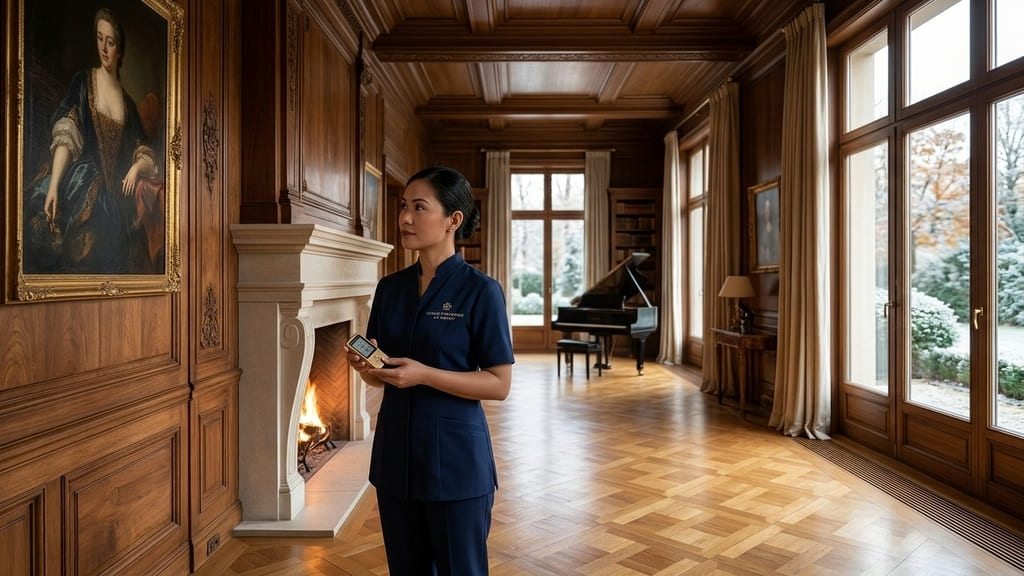
The approach of the winter season requires ultra-high-net-worth (UHNW) private residences to implement a rigorous technical preparation protocol. In historic estates or contemporary properties featuring fine wood paneling, frescoes, carved boiserie, rare marbles, and art collections, climate control management serves far more than the thermal comfort of occupants. It represents the primary preventive conservation tool for the entire architectural and aesthetic patrimony. Sudden thermal fluctuations or uncontrolled shifts in relative humidity can cause irreversible cracking in solid hardwoods, detachment of decorative plasters, and structural tension on master paintings.
Hygrometric Calibration and Protection of Sensitive Surfaces
The most critical parameter during cold months is not absolute temperature, but maintaining a constant relative humidity rate, generally between 45% and 55%. Prolonged operation of heating systems tends to drastically dry out indoor air, triggering hygroscopic shrinkage in organic materials such as antique parquet flooring, stringed musical instruments, and period furnishings.
The preventive protocol mandates verifying and recalibrating ambient hygrometric sensors alongside adiabatic or steam humidifiers integrated into Air Handling Units (AHUs). The House Manager coordinates specialized engineers so that every wing of the estate maintains a stable microclimate, avoiding excessive thermal gradients between formal reception rooms, sleeping quarters, and climate-controlled vaults housing fine art or confidential archives.
Inspection of Boiler Rooms, Heat Pumps, and High-Efficiency Heating Plants
Before outdoor temperatures drop below critical thresholds, the entire technological heart of the residence must undergo comprehensive testing. Whether the estate relies on geothermal systems, next-generation hydronic heat pumps, or traditional condensing boiler plants, preventive inspection eliminates the risk of sudden system failures during peak cold spells.
Engineers verify hydraulic circuit pressures, heat exchanger conditions, safety valve integrity, and burner cleanliness. In radiant floor or wall heating systems — frequently installed beneath marble or natural stone surfaces — chemical flushing and hydronic manifold balancing are performed to ensure uniform heat distribution, preventing localized thermal shocks that could damage the veining of delicate stone materials.
-
Airflow Efficiency, Indoor Air Quality, and Acoustic Silence
In an elite private residence, the climate control system must operate completely imperceptibly. Perceptible drafts, pressure differentials between rooms, or mechanical resonances traveling through ductwork are unacceptable flaws that compromise rest quality and the employer’s concentration.
Air Duct Sanitization and HEPA Filter Replacement
During winter, reduced natural ventilation makes Indoor Air Quality (IAQ) a decisive factor for the family’s respiratory health and cognitive well-being. The winter protocol requires full sanitization of air ducts using certified biocidal nebulization alongside video-endoscopic duct inspection.
Subsequently, filter banks within Controlled Mechanical Ventilation (CMV) units are completely replaced. Installing HEPA H13 or H14 filters paired with activated carbon stages guarantees the complete removal of fine particulate matter (PM2.5 and PM10), residual pollen, fungal spores, and Volatile Organic Compounds (VOCs), ensuring a pure and healthy atmosphere throughout every space of the estate.
Acoustic Balancing and Maintenance of Concealed Terminals
In homes designed according to contemporary luxury architecture standards, climate control terminals are frequently integrated into concealed linear slot diffusers or behind acoustic paneling. Over time, micro-dust accumulation or wear on anti-vibration mounts can generate aerodynamic hissing or low-frequency vibrations.
The protocol covers dynamic testing of inverter fans, bearing lubrication, and inspection of flexible duct connectors. Balancing airflow rates at the diffusers keeps sound pressure levels well below 25 decibels in bedrooms and private studies, preserving the absolute silence essential for the executive’s psychophysical recovery.
-
Home Automation, Operational Continuity, and Staff Oversight
Modern management of thermal and energy systems relies on integrated home automation platforms (KNX, Lutron, Crestron) that orchestrate heating, solar shading, and lighting based on actual room occupancy and weather forecasts. However, even the most sophisticated technology requires constant, competent human supervision to perform at its peak.
Thermal Scenario Programming and Power Continuity Integration
Working alongside systems engineers, the House Manager updates heating curves and seasonal presets within the Building Management System (BMS). Distinct modes are configured for family occupancy, guest hosting, and periods of absence, consistently maintaining an optimal setback temperature that protects architectural finishes without wasting energy.
Equally vital is testing redundancy and power continuity systems. Emergency backup generators and Uninterruptible Power Supplies (UPS) undergo load testing to guarantee that, even during winter storm blackouts, circulation pumps, exterior pipework freeze-protection systems, and technical room dehumidifiers continue operating without interruption.
The House Manager’s Role in Supervising External Technicians
Bringing maintenance technicians onto a private estate represents a sensitive moment regarding security and confidentiality. The House Manager schedules preventive maintenance well in advance, consolidating visits into time windows that never disrupt the homeowners’ daily routines.
Every external technician undergoes credential verification, is continuously escorted by service staff within technical areas, and is bound by strict Non-Disclosure Agreements (NDAs). Upon completion, the House Manager logs compliance certificates, flue-gas analysis reports, and maintenance records into the estate’s technical manual, ensuring seamless traceability for the Family Office.
Conclusion: Technical Prevention as a Guarantee of Winter Serenity
In conclusion, executing a thorough preventive maintenance protocol for heating and climate control systems is essential to safeguard both residential comfort and the physical integrity of prestigious estates. Relying on the qualified professionals selected by Luxury Philippines D.S. Agency ensures impeccable, discreet, and forward-thinking technical oversight, transforming winter facility management into a silent guarantee of absolute comfort, efficiency, and asset preservation.