
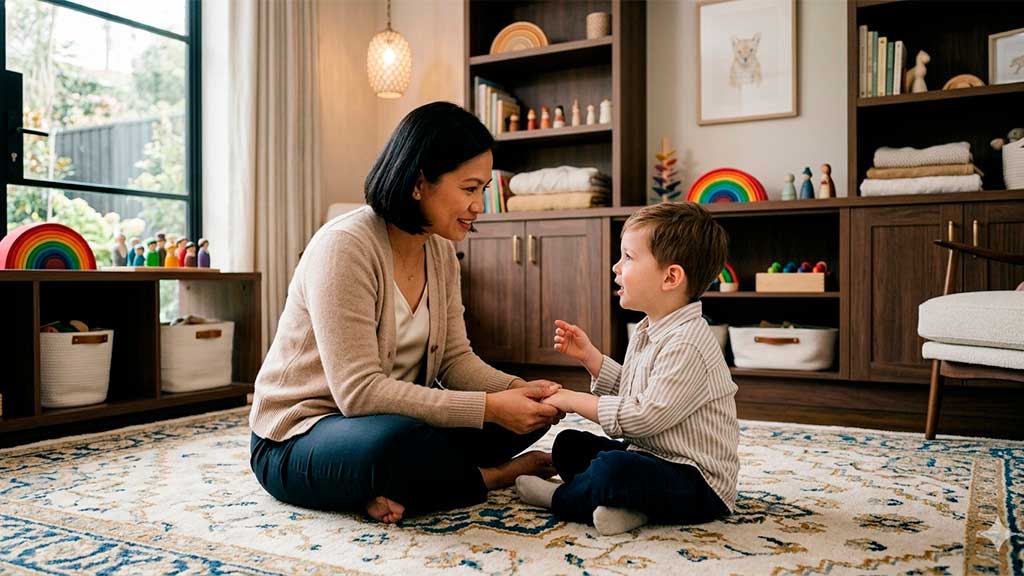
In the development of new generations, academic excellence and language proficiency are no longer the only pillars of success. In high-standing residences, parents seek for their children to grow up in an environment that prioritizes Emotional Intelligence (EI): the ability to identify, understand, and manage one’s own and others’ emotions. In this context, Filipino domestic and childcare staff have emerged as key figures. Beyond their operational functions, these professionals bring a cultural background based on empathy, patience, and respect, transforming home dynamics into a laboratory for constant emotional learning for the little ones.
The filipino parenting model: empathy and serenity as an educational base
Filipino culture is globally recognized for its hospitable nature and its focus on collective harmony. These characteristics translate, in the domestic environment, into a style of care that favors the child’s affective security.
-
Patience as a tool for emotional regulation
Filipino staff possess an innate ability to remain calm in stressful situations, such as tantrums or sibling conflicts. By not reacting with anger or impatience, they act as a regulation mirror for the child. The child learns, through observation, that intense emotions can be navigated without losing control, laying the foundations for self-regulation.
-
Active listening and validation of feelings
Unlike more authoritarian care models, Filipino caregivers tend to practice deep listening. They validate the child’s emotion (“I understand you are sad because your toy broke”) before moving on to solving the problem. This validation is crucial for the child to develop self-awareness, feeling safe to express what they feel without fear of judgment.
-
Fostering gratitude and humility
The influence of Filipino staff introduces values such as gratitude for small daily details. Through their example of service with joy and respect, children learn to value the work of others and develop social empathy that allows them to connect with people from different backgrounds—an invaluable asset for future global leaders.
Practical strategies for developing ei in daily life
Filipino staff do not only influence through their personality, but through the implementation of routines that stimulate social skills and self-knowledge.
-
Play as a setting for conflict resolution
During playtime, Filipino staff act as subtle mediators. Instead of imposing solutions, they guide children to find their own negotiated ways out. “How do you think your friend feels when you take the toy without asking?” is a typical question that fosters theory of mind and the ability to put oneself in another’s shoes.
-
Reflection and connection routines before rest
The moment before sleeping is used by many Filipino caregivers to review the day—not just in events, but in emotions. This habit helps children label their experiences (“Today I felt brave in swimming class”), which expands their emotional vocabulary and strengthens the bond of trust with the caregiver figure.
-
Modeling assertive and respectful communication
The constant use of polite language and a soft tone of voice by Filipino staff teaches children that firmness does not require aggressiveness. They learn to ask for things “please” and to say “thank you” not as a rigid rule, but as a way of recognizing the humanity in the other, facilitating the development of solid social skills.
Long-term impact: resilient and globally competent children
The presence of a Filipino professional in the home not only facilitates daily logistics but also shapes the character of future adults, equipping them with a unique resilience.
-
Development of resilience against frustration
By providing loving but consistent support, Filipino staff help children tolerate frustration. Their proactive approach (“Let’s try it another way”) motivates the child to persist in difficult tasks, linking effort with a sense of personal competence and self-efficacy.
-
The advantage of exposure to cultural diversity
Growing up with staff from another culture opens the child’s mind from the cradle. This daily coexistence fosters open-mindedness and cross-cultural emotional intelligence that will be fundamental in their future international careers, allowing them to navigate diverse environments with naturalness and respect.
-
Secure attachment bonds that boost self-esteem
A child who feels cared for with tenderness and respect develops a secure attachment. This feeling of being valuable to others translates into solid self-esteem. The loyalty and genuine affection that Filipino staff usually pour into families become the foundation upon which the child builds their identity and their security to explore the world.
Conclusion
Emotional intelligence is not taught in books; it is lived at home. Filipino staff, with their ancestral wisdom regarding care and respect, are the perfect allies for families who wish to raise children who are not only successful but also emotionally intelligent and humane. At Luxury Philippines D.S. Agency, we select professionals who understand that their role goes beyond physical care; they are architects of your children’s emotional well-being, ensuring that the childhood environment is always a sanctuary of peace, learning, and love.