
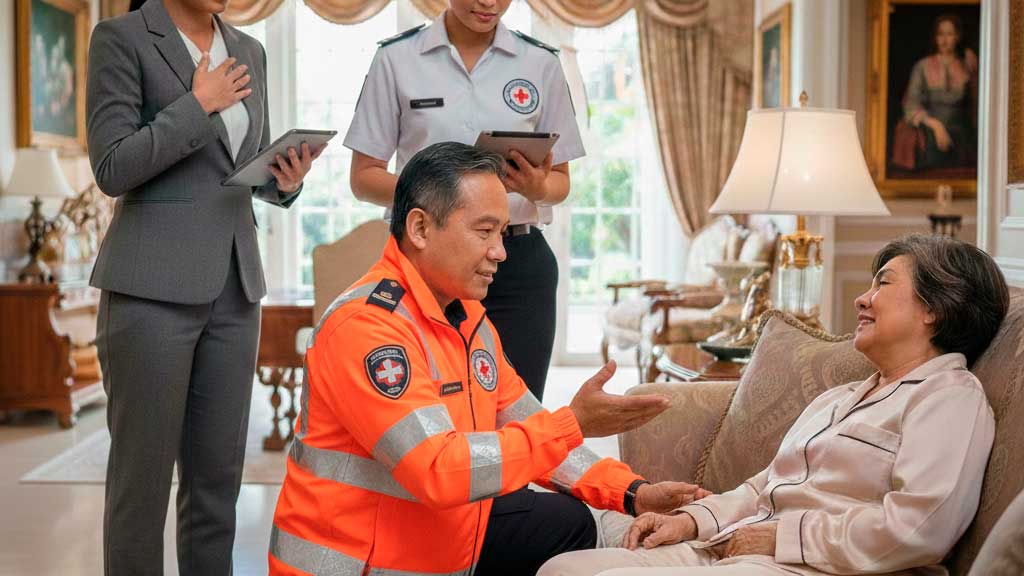
The security of a high-end residence is not limited exclusively to the installation of advanced surveillance systems or fortified perimeters. In everyday life, true protection lies in the human capacity to respond to critical situations. Domestic staff, being the operational core that constantly inhabits and manages the property, become the first line of defense against any eventuality. A well-prepared professional does not just maintain order; they act as a crisis manager capable of safeguarding the integrity of family members and the home’s material assets.
Management of technical and structural contingencies
A complex home requires constant technical vigilance. Domestic emergencies, if not managed within the first few minutes, can lead to irreparable damage. Domestic staff must act with a mindset of prevention and immediate response.
Early detection and action protocols for incidents
The speed with which a water leak, an electrical fault, or a fire is identified determines the magnitude of the damage. Domestic staff must know the exact location of every control panel, main shut-off valves, and extinguishing systems. In the training we promote, we emphasize that the professional should not be a bystander but a first-intervention technician who knows how to isolate the problem before professional emergency services arrive.
Preventive maintenance as a security shield
The best way to manage an emergency is by preventing it from happening. The role of domestic staff includes routine supervision of installations that often go unnoticed by owners. Checking the status of drainage systems before the rainy season or ensuring that emergency exits are always clear are critical tasks. This proactivity drastically reduces risks derived from structural or technical failures.
Personal security and family protection protocols
Beyond infrastructure, the most sacred value of any home is the family residing in it. Domestic staff play a vital role in protecting the privacy and physical integrity of every member of the house.
Access management and immediate environment surveillance
Staff are the filter that separates the public environment from the private space. A strict security protocol for receiving packages, controlling access for external vendors, and monitoring suspicious movements near the property is fundamental. Elite Filipino staff stand out for a natural discretion combined with keen observation, allowing them to detect anomalies in the security routine without disturbing the peace of the home.
Emergency medical assistance and first aid
In the event of a domestic accident or a sudden health crisis, every second counts. Having staff trained in first aid who are familiar with basic medical histories (such as severe allergies) is an invaluable asset. Their role is to stabilize the situation, contact the relevant medical services, and maintain the calm of other family members, acting as an efficient communication bridge during high emotional tension.
Digital privacy and information protection
In the modern age, security is also digital. Domestic staff must be aware of the importance of discretion in using devices and social media. Not revealing details about family absences, scheduled trips, or the internal layout of the house is a form of emergency preparedness that prevents planned thefts or intrusions.
Continuous training as a guarantee of resilience
For a professional to be effective in a crisis, preparation must be a constant practice, not an isolated event. Resilience, so characteristic of the staff we select, is enhanced through specific training.
Simulations and personalized evacuation plans
Every residence has unique architecture and needs. It is essential for domestic staff to participate in the design and execution of evacuation plans. Knowing exactly which valuables to rescue, which route to take, or where the safe “assembly point” is located ensures that, in the face of panic, the professional acts mechanically and efficiently.
Critical communication and leadership under pressure
During an emergency, communication is often the first thing to fail. Staff must be trained to deliver clear and concise reports to owners and authorities. Silent leadership—the ability to take charge of a situation without generating unnecessary alarm—is what differentiates a domestic employee from a true property manager.
Conclusion
Emergency preparedness is a fundamental extension of the service ethic. A domestic professional is not only there to serve the table or manage order; they are there to be the guardian of security in the home. At Luxury Philippines D.S. Agency, we ensure that the Filipino staff we represent possess not only the technical skills but the composure and commitment necessary to protect what matters most in times of crisis.