
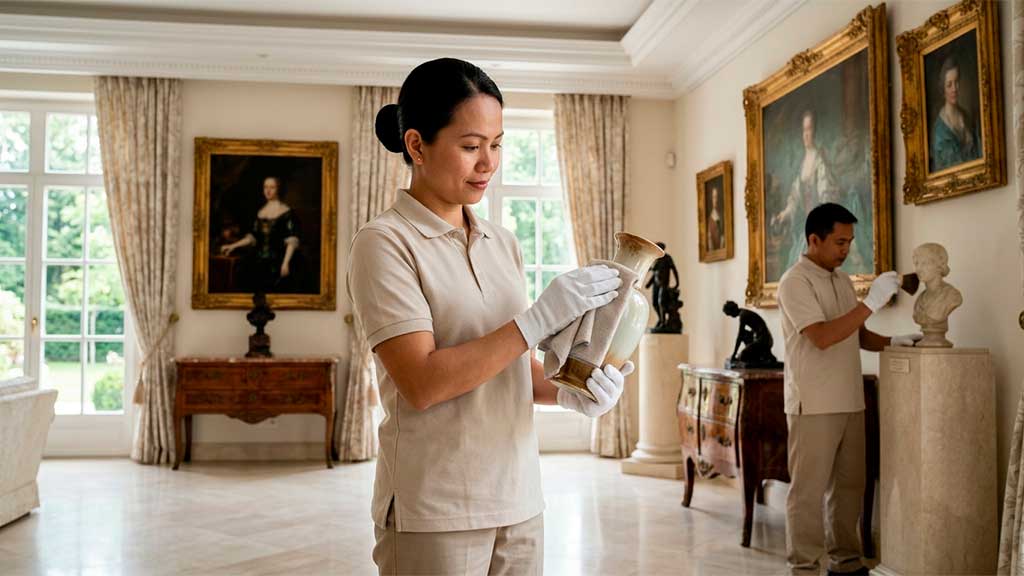
The interior of an exclusive residence is defined not only by its architectural design but also by the cultural treasures it houses. High-net-worth families frequently turn their homes into private galleries where canvases by classic masters, contemporary sculptures, 18th-century furniture, and dynastic porcelains coexist. However, unlike a museum, a home is a living and dynamic environment. The presence of natural light, temperature fluctuations due to daily use, and the inherent risks of cleaning tasks represent a constant threat to the physical integrity of these works. In this scenario, the qualification of domestic staff takes on a museum-like dimension. The preservation of this heritage cannot be left to chance or common sense; it requires the implementation of strict technical protocols and specialized training that transforms daily maintenance into an invisible protective shield for art.
Residential Environmental Control and Piece Handling
Preventive art conservation begins with the invisible monitoring of the environment and the application of strict physical rules before any hand comes into contact with a piece.
-
Microclimatic Stabilization and Lighting Management
Elite domestic staff are trained to constantly monitor the property’s home automation climate control systems. Artworks demand stabilized ranges: a constant temperature between 18°C and 22°C and, critically, a relative humidity that fluctuates strictly between 45% and 55%. Staff must verify that dehumidifiers and sensors function correctly to prevent mechanical expansion in wooden supports or the diacritic appearance of mold. Likewise, luminous exposure is managed through the coordinated use of blinds with UV filters and regulated LED lighting, preventing direct radiation from fading pigments or weakening ancient textile fibers.
-
Strict Protocols for Gripping, Moving, and Barrier Use
When a piece must be moved to prepare a room, staff apply the rule of “zero handling” without equipment. An exposed surface is never touched with bare hands; the mandatory use of technical long-fiber cotton gloves is required for sculptures or metallic objects, or powder-free nitrile gloves for paintings and polychrome surfaces. Staff learn to identify the structural weak points of antiques: a pitcher is never held by its old handle, nor a carved chair by its cresting. Every transfer is planned by tracing an obstacle-free route before lifting the piece.
Specialized Hygiene Protocols by Material Type
Cleaning in the environment of artworks abandons commercial chemical products to focus on mechanical removal techniques and dry conservation.
-
Dry Maintenance of Easel Paintings and Gilded Frames
Oil or acrylic canvases are never touched with damp cloths or conventional feather dusters, whose fibers can catch on the micro-cracks in the paint (craquelure). The protocol dictates the exclusive use of extremely soft sable or goat hair brushes, performing slow and controlled downward movements to displace suspended dust. Gilded frames with gold leaf, highly vulnerable to humidity, receive the same dry treatment, prohibiting any abrasive cleaner that could lift or dissolve the ultra-thin original metallic layer.
-
Conservation of Silverware, Bronzes, and Noble Furniture
Noble wood furniture with marquetry or traditional shellac varnishes (french polish) is protected from commercial wax. Staff use only dry microfibers or, under the conservator’s direction, neutral microcrystalline waxes applied in very light layers every few months. For silverware and decorative bronzes, aggressive chemical metal cleaners that wear away historical patinas are ruled out. Oxidation is prevented through frequent dusting, and if polishing is required, specific low-abrasion pastes applied with surgical cotton cloths are used.
-
Handling and Sanitization of Historic Porcelains and Glass
Decorative tableware, porcelain vases, and antique glassware are cleaned in isolation inside plastic containers lined with towels to cushion any accidental impact. The use of hot water (which can expand internal cracks) is prohibited, opting instead for lukewarm water with fragrance-free, pH-neutral soap. Drying is performed immediately by hand with lint-free linen cloths, avoiding air drying which could leave mineral calcareous deposits on the piece’s enamel.
The Filipino Human Factor and Heritage Custody
The success of these delicate protocols rests on the discipline, methodological rigor, and patience of the team in charge of the daily care of the home.
-
Methodological Discipline and Strict Adherence to Manuals
Staff selected and trained by global prestigious agencies, such as Luxury Philippines D.S. Agency, stand out notably in this field due to their high capacity for concentration and rigorous respect for technical rules. Professionals of Filipino origin demonstrate an excellent disposition to memorize and follow conservation inventories to the letter. They do not improvise cleaning methodologies; if a piece presents a change of state or an unknown stain, they stop the process and immediately notify the housekeeper or the House Manager, protecting the work from erroneous interventions.
-
Oriental Patience and Delicacy in Precision Routines
Art maintenance does not tolerate rushing or time pressure. The thoroughness required to dust a Murano crystal chandelier or clean the reliefs of an oriental lacquered piece of furniture demands extraordinary patience. Filipino staff possess an intrinsic delicacy in their movements and a deep respect for objects that symbolize the history and status of their employers. Their unhurried and detailed approach ensures that every intervention on an antique is executed with the same reverence and gentleness that would be employed in a museum restoration laboratory.
Conclusion
The maintenance of art collections within the home is the ultimate test of excellence for any domestic service team. A stately residence can lose aesthetic and historical value if its artistic heritage suffers silent deterioration due to poor cleaning practices or environmental negligence. By delegating the custody of these spaces to professionals with a solid culture of detail and rigorous training in discretion and care, such as the teams provided by Luxury Philippines D.S. Agency, high-net-worth families guarantee the immortality of their cultural investment. The result is a vibrant and safe domestic environment, where art does not just decorate the rooms, but is preserved intact for future generations thanks to expert, respectful, and silent hands.