
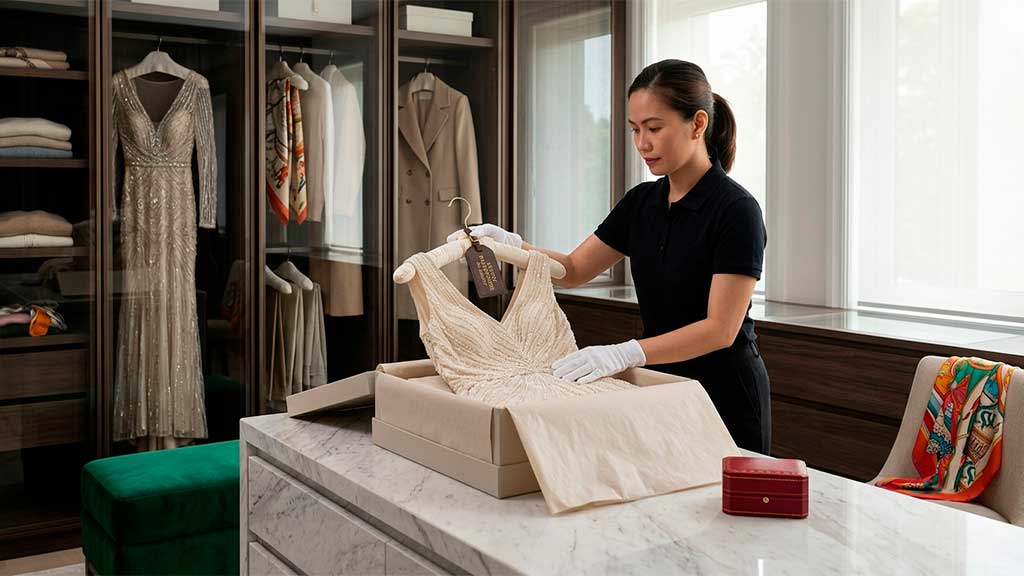
The wardrobe of a high-net-worth estate houses true textile works of art. From bespoke haute couture pieces and evening gowns from historic fashion houses to exotic fur coats, cashmere, and natural silk, these collections require care that goes far beyond conventional cleaning. Between-season storage is not simply about putting clothes away at the end of a time of year; it is a systematic process of preventive conservation designed to perpetuate the texture, color, and structure of each fabric. Degradation caused by humidity, dust, ultraviolet light, and pests can irreversibly damage delicate fibers. Therefore, implementing advanced textile conservation protocols through highly trained staff is the key to preserving the heritage and sentimental value of these impeccable pieces.
Technical Environmental Conditioning and Risk Control
The stability of environmental conditions within dressing rooms and storage areas is the first line of defense against textile degradation.
-
Microclimate Control: Relative Humidity, Temperature, and Light Filtration.
Natural fibers are highly sensitive to environmental variations. Excessive humidity encourages the appearance of mold and mildew, while an overly dry environment makes silk, wool, and fur fibers brittle. Areas dedicated to haute couture must maintain a constant relative humidity between 45% and 55%, accompanied by a controlled temperature not exceeding 18°C-20°C. Likewise, direct sunlight and inadequate artificial lighting fade pigments and weaken threads. It is essential to use low-heat LED lighting and UV radiation filters on windows and protective display cases.
-
Selection of Neutral Materials and Chemical Barriers Against Degradation.
Direct contact with unsuitable materials is a frequent cause of inadvertent deterioration. Conventional plastic releases chemical gases and traps condensation, while untreated wood hangers or ordinary cardboard emit acids that yellow white fabrics. Garments must be covered with breathable covers made of un-dyed organic cotton or high-density linen. When preparing archival boxes for historic or embroidered pieces, acid-free tissue paper is used exclusively to stabilize folds and prevent the transfer of pigments or moisture between layers.
Packing and Suspension Methodologies by Fabric Type
Each garment category demands a specific suspension or folding technique to prevent irreversible structural deformations during storage months.
-
Protocols for Embroidered Gowns, Haute Couture, and Heavy Pieces.
Heavy garments, especially gowns with intricate beadwork, sequins, or elaborate lace, suffer structural stress if hung for extended periods, as gravity distorts shoulder seams. These pieces must be stored flat in rigid archival boxes, padding folds with neutral paper rolls to prevent permanent creasing. On the other hand, structured jackets and suits require contoured hardwood hangers covered in fabric, whose shoulder width exactly matches the garment to preserve tailoring contours.
-
Comprehensive Care of Exotic Furs, Silk, Lace, and Cashmere.
Each natural fiber reacts differently to the passage of time. Fine furs need breathing space and conditioning in specialized cold storage vaults before seasonal packing, preventing fur flattening. Silk and lace require individual isolation to prevent snagging on adjacent zippers or embroidery. For cashmere and fine wools, meticulous pre-cleaning or brushing is applied to eliminate dust micro-particles, followed by systematic folding and the use of natural moth repellents such as high-purity dry lavender or red cedarwood.
The Precision of Filipino Staff in Wardrobe Management
Meticulousness, manual delicacy, and respect for protocol make domestic staff of Filipino origin the ideal profile for high-end conservation.
-
Methodological Rigor, Delicate Handling, and Digitalized Inventory.
Professionals trained by Luxury Philippines D.S. Agency stand out for an insuperable level of detail in managing luxury wardrobes. With artisanal skill and using white cotton gloves to prevent skin oils from contacting fabrics, staff execute flawless brushing, airing, and storage protocols. Furthermore, they integrate digital tools to maintain an exhaustive record of each garment: exact location, conservation state, treatments received, and high-resolution photography. This level of organization ensures that garments return to daily use in conditions identical to their creation in haute couture ateliers.
Conclusion
Advanced textile conservation at home is a precise art that combines technical knowledge, organizational rigor, and exceptional aesthetic sensitivity. Ensuring that haute couture collections and priceless textile pieces survive the passing seasons without losing their original splendor requires expert hands and an absolute commitment to excellence. By entrusting wardrobe care and management to the team selected by Luxury Philippines D.S. Agency, high-net-worth families guarantee the flawless preservation of their textile legacy. The result is a perfectly protected wardrobe, ready to dazzle every new season with the elegance and distinction that characterize its owners.