
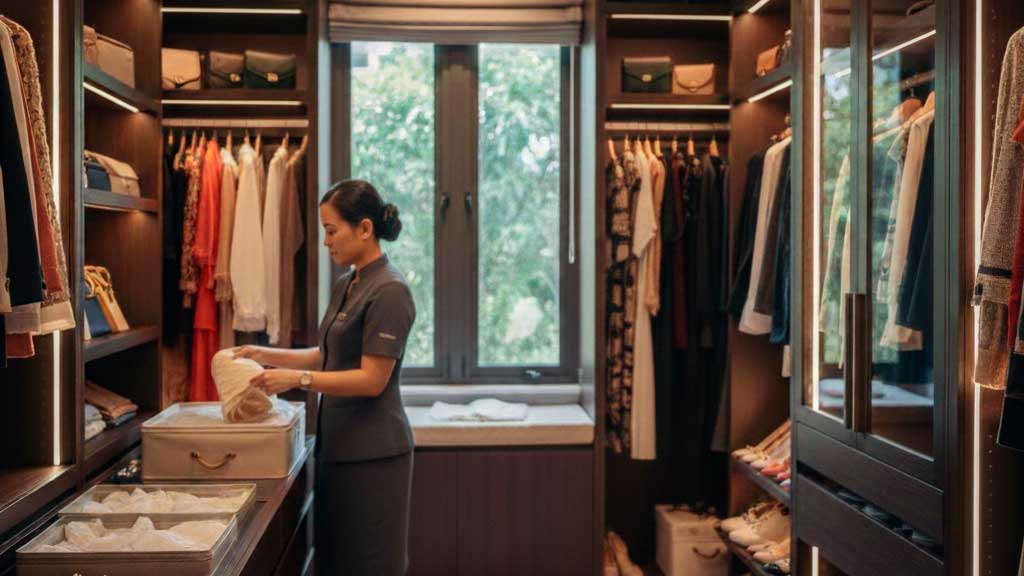
A high-end wardrobe is much more than a storage space; it’s an extension of personal heritage and a collection of pieces that often hold both economic and sentimental value. From tailored suits and haute couture dresses to exotic leather accessories and delicate natural fibers, each item requires specific knowledge for its preservation. In this context, Filipino domestic staff have earned an international reputation for their meticulousness and “silent mastery” in textile treatment, ensuring that each garment is not only kept clean but also preserves its original structure and luster over the years.
The science behind the care of natural fibers
The maintenance of noble materials is not a general cleaning task but an exercise in applied chemistry and physics. Qualified staff understand that each fabric has its own “language” and a specific tolerance to humidity, light, and temperature.
-
Treatment of silk and cashmere: softness and structure.
Protein-based fibers, such as silk and cashmere, are extremely sensitive to sudden temperature changes and harsh chemicals. Filipino professionals excel in their patience with hand washing and flat drying, essential techniques to prevent fiber deformation. They understand the importance of avoiding excessive friction, which can break silk filaments or create undesirable “pilling” in wool, ensuring the luxurious feel of the garment remains intact.
-
Linen and egyptian cotton: the art of artisan ironing.
Achieving an impeccable finish on plant fibers requires a steaming and pressing technique that very few master. The secret to a luxury wardrobe lies in its presentation; an expert professional knows that linen should be ironed slightly damp to remove wrinkles without burning the fiber. This level of detail ensures that high-thread-count sheets and formal shirts present a crispness that only manual care can provide.
Management and preservation of the high-end wardrobe
Beyond washing, organization and storage are fundamental pillars to prevent premature deterioration. A poorly managed wardrobe can become the worst enemy of fashion longevity.
-
Storage protocols according to seasonality.
Filipino staff implement wardrobe rotation systems that go beyond simple seasonal changes. They know that leather pieces require breathable cotton covers, never plastic, and that heavy knitwear should be folded with tissue paper to prevent weight from stretching them on hangers. The mastery lies in creating an environment where clothes “breathe,” controlling ventilation and preventing dust accumulation that can attract pests or set odors.
-
Maintenance of leather goods and delicate accessories.
Calfskin bags, suede shoes, or exotic leather belts need periodic hydration to prevent the material from cracking. The support of a domestic professional includes cleaning metal hardware to prevent oxidation and using appropriate shoe trees to maintain footwear shape. This preventative care saves owners costly professional restorations in the long term.
-
Environmental control: light, humidity, and temperature.
An elite domestic professional acts as a museum conservator within the home. They monitor that direct sunlight does not degrade natural dyes of garments and that humidity levels remain constant to prevent mold on leather or extreme dryness in wools. This invisible vigilance allows a fashion collection to maintain its resale value and aesthetic utility for decades.
The ethics of detail: visual order and personalization
The aesthetics of a wardrobe directly influence the owner’s daily experience. Order is not just functional; it is a form of respect for belongings and the employer’s lifestyle.
-
Organization by color, type, and occasion.
The Filipino methodology of organization is visually harmonious. Garments are grouped so that the host can select their outfit efficiently, following criteria of chromatism or etiquette. This discipline reduces morning stress and ensures that all pieces are visible and accessible, preventing valuable garments from being forgotten at the back of the closet.
-
Minor repairs and emergency tailoring.
The ability to perform small repairs, secure loose buttons, or reinforce delicate seams is a highly valued technical skill. Instead of outsourcing every small alteration, domestic staff resolve these needs immediately, ensuring the garment is ready for use at any time. This quick response capability is essential for those who maintain an active and demanding social life.
Conclusion
The care of textiles and noble materials under the supervision of expert Filipino staff transforms home management into an artistic conservation discipline. It is not simply about organizing clothes but about protecting an investment in style and quality. At Luxury Philippines D.S. Agency, we select profiles that possess the tactical sensitivity and commitment to excellence required for a luxury wardrobe. By entrusting your most prized possessions to expert hands, you not only guarantee their durability but also enjoy the peace of mind of knowing that your personal image is always in the hands of masters of detail.