
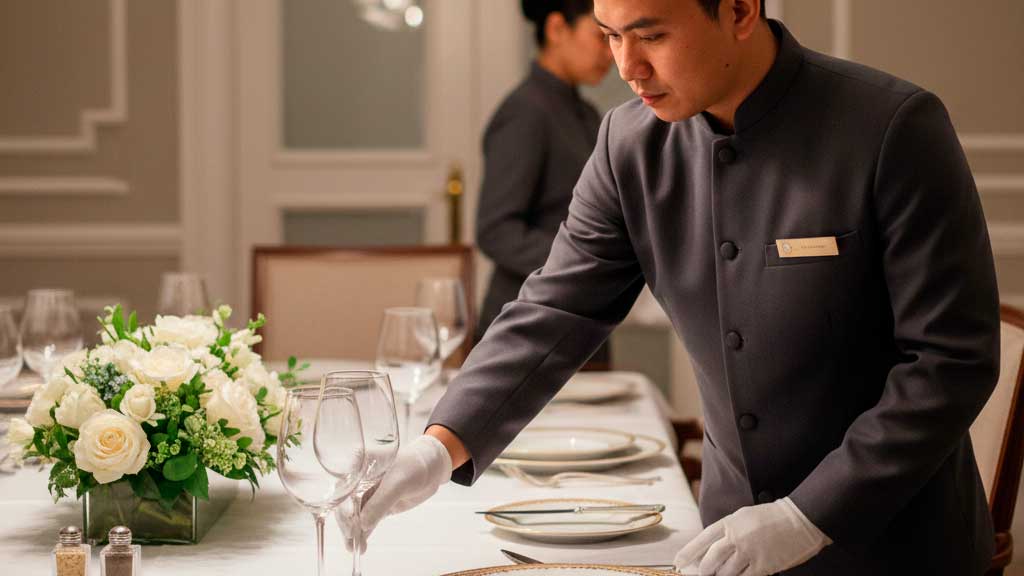
In high-level residences, the dining room is not merely a space for nutrition, but a stage where family culture is celebrated, important deals are closed, and well-being is cultivated. The difference between an ordinary meal and an exceptional gastronomic experience lies in the execution of protocol and the mastery of etiquette. A high-standard table service is not a rigid formality, but a language of respect and sophistication that transforms the mundane into the extraordinary. Filipino domestic staff, thanks to their detail-oriented training and innate hospitality, excel in implementing these protocols, ensuring that every service reflects the elegance and status of the home.
Foundations of etiquette in professional table service
Etiquette is the grammar of service. For a dining room to operate with excellence, the staff must master the international standards governing behavior and the arrangement of elements on the table.
-
The technical arrangement of the “mise en place”
High-standard service begins with perfect symmetry. The expert professional knows that the distance between cutlery must be exact and that every element has a non-negotiable function and location. From the alignment of glassware—placed from largest to smallest according to the order of use—to the placement of the bread plate on the left, every detail communicates order. Filipino staff are especially meticulous in this phase, ensuring that linen tablecloths lack visible folds and that the silver shines under the dining room lights.
-
Precedence protocol and service flow
Knowing whom to serve first and which side to approach the guest from is vital to avoid interrupting the flow of conversation. The rule dictates that plates are served from the left and removed from the right, always maintaining a discreet posture. Trained staff understand table hierarchy, prioritizing guests of honor and hosts according to the type of event, whether it is a formal dinner or a private family lunch. This invisible fluidity allows owners to forget about logistics and focus on social enjoyment.
The sophistication of beverage service and pairing
Beverage handling is one of the aspects where the mastery of domestic staff is most demonstrated. It is not just about pouring, but about preserving the properties of each wine and product.
-
Wine service: from uncorking to decanting
High-standard service requires staff to know the ideal temperature for each wine and the type of glass it requires. The process of presenting the label, the silent uncorking, and, if necessary, the use of a decanter to oxygenate vintage wines, is executed like a choreography. Filipino staff bring a natural elegance to this process, always remaining attentive to refill glasses proactively, preventing the guest from having to ask.
-
Water and non-alcoholic beverage service
Even the simplest element, like water, follows a protocol. The distinction between sparkling, still, and room-temperature water, as well as the use of citrus slices or clear ice, elevates the perception of care. The staff ensures that glass carafes are always spotless and that soft drinks are served with the proper technique to avoid losing carbonation, proving that in luxury, there are no minor details.
-
The ritual of after-dinner coffee and tea
The closing of a meal is as important as the beginning. Coffee and tea service must include a careful presentation of sugars, milks, and accompaniments. Knowledge of different tea varieties and their exact brewing time is a skill that elite staff master perfectly, offering a final moment of relaxation that seals the positive dining experience.
Aesthetics and atmosphere: beyond the cutlery
The visual and sensory environment is what truly envelops the guest in a high-standard experience. The staff does not just serve food; they manage a stage.
-
Floral decoration and ephemeral centerpieces
Domestic staff with aesthetic training know that decoration must complement the food, never obstruct it. Centerpieces must be at a height that allows visual contact between guests and should not have scents so strong they interfere with the aromas of the gastronomy. The ability to create fresh floral arrangements or candle displays for the evening is an added value that Filipino staff offer with great artistic sensitivity.
-
Maintaining rhythm and acoustic discretion
High-standard service is silent. The handling of china and cutlery is done without noise, and communication among team members is almost telepathic or based on subtle signals. Staff know how to read the body language of guests; they detect when a conversation is intense and space must be respected, and when it is the opportune moment to intervene and clear a service. This “absent presence” is the ultimate expression of professionalism in the home.
Conclusion
Table protocol and etiquette are not just rules of courtesy, but management tools that ensure the home is a temple of hospitality. At Luxury Philippines D.S. Agency, we select staff who not only know the technical side of service but also possess the elegance and vocation for service needed to elevate every meal to the category of an event.