
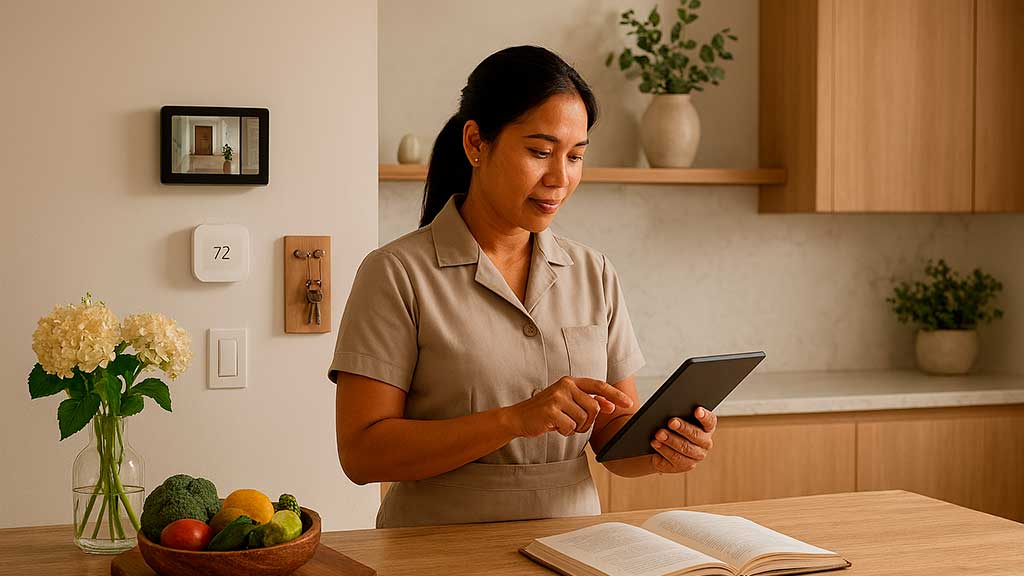
The evolution of the luxury home has gone beyond mere aesthetics; today, it is defined by the confluence of traditional sophistication and cutting-edge technology. Smart automation, security, and entertainment systems are not just conveniences but essential components that optimise daily life. However, the full potential of a smart home is only unlocked when harmoniously integrated with exceptional domestic assistance. The challenge is fusing digital efficiency with the human touch, ensuring that technology serves to enhance well-being, privacy, and discretion. Smart home management is not just about devices, but about how expert staff orchestrate these elements to create a seamless sanctuary of efficiency and luxury.
The integration challenge: technology and the human touch
The coexistence of advanced automation and human intervention requires a new level of knowledge and a proactive mindset.
-
From interface to experience: humanising technology.
The first challenge is transforming complex technological interfaces into a fluid and almost invisible user experience for the employer. Domestic staff, especially roles like the butler or house manager, act as the primary translator and operator of these systems. It’s not just about turning on the lights; it’s about configuring specific lighting environments for every moment, adjusting the ideal temperature before the employer’s arrival, or programming ambient music according to the time of day. Their role is to “humanise” technology, anticipating preferences so that the home functions intuitively, without the employer having to constantly interact with screens or voice commands.
-
Proactive maintenance and technical troubleshooting.
Technology, however sophisticated, can fail. A critical component of smart home management is the domestic staff’s ability to perform proactive maintenance and troubleshoot basic technical issues before they escalate. This includes ensuring that software updates are performed without interruption, restarting routers when necessary, or diagnosing minor faults in security or entertainment systems. The ability to identify a problem, attempt an initial fix, and, if necessary, coordinate with technical support, minimises interruptions and guarantees the reliability of the home’s systems.
Enhancing security, efficiency, and privacy
The integration of technology with domestic service offers substantial benefits that go beyond convenience.
-
Advanced security and access management.
Luxury homes require the highest standards of security. Smart surveillance, access control, alarm systems, and remote monitoring are fundamental. Trained domestic staff are key to the effective management of these systems. This involves monitoring security cameras, granting temporary access to visitors or service providers, and ensuring that all entry and exit points are correctly locked and secured, even when the family is away. Their ability to operate these systems discreetly and competently is vital for the family’s peace of mind and protection.
-
Energy optimisation and resource management.
Smart technology is also a powerful tool for efficiency and sustainability. Staff can use automation systems to optimise energy consumption, intelligently adjusting lighting and climate control, or programming garden irrigation based on weather conditions. They can also monitor water or electricity usage, identifying potential wastage and contributing to a more conscious and economical resource management, which is increasingly valued in luxury homes.
-
Discretion and digital privacy protection.
In a connected home, digital privacy is as important as physical privacy. Domestic staff who manage smart home technology must be strictly trained in discretion and data security protocols. This involves using secure passwords, understanding the importance of not sharing information about home systems, and managing connected personal devices. Their commitment to privacy extends into the digital realm, protecting the employer’s sensitive information and the integrity of the home network.
The agency as a facilitator of the digital transition
An elite agency not only provides staff but also advises on how to integrate talent with the existing technological infrastructure.
-
Selecting staff with technological aptitude.
The selection process of a modern agency incorporates the assessment of technological aptitude. Beyond traditional skills, they seek staff with familiarity with digital interfaces, the ability to quickly learn new systems, and a mindset geared toward technological problem-solving. This ensures that the professional is not only willing but able to master the smart home environment from day one.
-
Continuous training in new platforms and systems.
The world of smart home technology evolves rapidly. An agency committed to excellence provides or facilitates the continuous training of its staff in the latest platforms and systems. This guarantees that the butler or house manager is always up-to-date, trained to operate the new solutions the employer may adopt, and capable of advising on best practices in technological home management.
In conclusion, smart home management is a fundamental pillar of contemporary luxury, but its success depends on the perfect integration of technology with the expertise and discretion of domestic staff. A team that not only operates the systems but humanises them, maintains them, and protects privacy, is an invaluable asset. At Luxury Philippines D.S. Agency, we understand that the future of elite domestic service lies in this symbiosis. We select and prepare Filipino professionals to be the orchestrators of your connected home, ensuring that technology works in your favour, creating an environment of effortless luxury, security, and efficiency.