
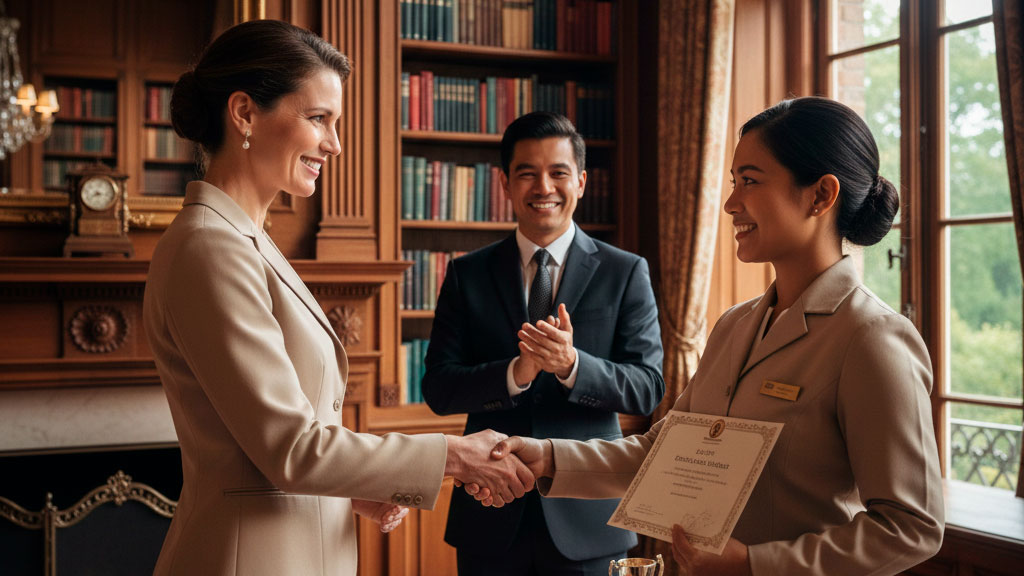
In the elite domestic service sector, staff stability is as valuable as the quality of the service itself. A loyal and motivated team not only offers superior performance but also guarantees the continuity of discretion, trust, and a deep understanding of the employer’s lifestyle. Beyond competitive compensation, recognition and motivation are the invisible pillars that build a lasting relationship of loyalty. Conscious leadership that values and nurtures its Filipino staff invests in the long-term peace of mind of its own home. Understanding how to recognize, reward, and motivate a team is not just an act of generosity, but a smart strategy for retaining talent and ensuring uninterrupted harmony.
Beyond salary: the value of recognition
Money is a hygiene factor, but recognition is an intrinsic motivator that fosters commitment and loyalty.
- The power of an authentic and specific ‘thank you.’
In the daily routine, it’s easy to overlook small efforts. However, an authentic and specific “thank you” can have a profound impact. It’s not just “thanks for dinner,” but “thanks for dinner; the fish was perfectly cooked, and the presentation was impeccable—I know you worked hard to learn that recipe.” Recognizing the detail and effort shows that the staff’s work is seen and valued, not just expected. This type of honest, verbal recognition is the foundation of team morale and self-esteem.
- Public and private recognition: tailoring appreciation.
Some staff members may appreciate discreet and private recognition, while others may be more motivated by public recognition among their teammates. Empathetic leadership understands these preferences and tailors its appreciation. This can range from individual praise for a job well done to mentioning a team member’s excellent work in a staff meeting or even through a small, handwritten note. The key is that the recognition is meaningful to the individual.
Strategies for motivation and professional development
Motivation is not just a state of mind; it is a result of support for growth and opportunities for development.
- Opportunities for training and skill development.
Filipino staff, known for their desire to learn and improve, greatly value opportunities for training and skill development. Offering courses in new culinary techniques, smart home management, languages, sommelier skills, or advanced protocol not only enhances their abilities but also shows them that the employer invests in their professional future. This investment is a powerful motivator that fosters long-term loyalty and commitment.
- Delegation of responsibilities and autonomy.
When staff demonstrate competence and reliability, delegating additional responsibilities and granting autonomy in certain areas can be a great motivator. This not only eases the employer’s burden but also empowers the employee, showing confidence in their judgment and capability. Feeling like a valuable and trusted team member, with the freedom to make decisions within their scope, increases job satisfaction and the sense of belonging.
- Bonuses, incentives, and reward programs.
While recognition is not purely monetary, bonuses, incentives, and reward programs can complement fair compensation. These can be tied to specific goals (e.g., maintaining impeccable pantry inventory for a quarter, seamlessly managing a major event) or be discreet rewards for continued exceptional service. These financial incentives, when used strategically, reinforce desired behaviours and demonstrate a tangible value of the work.
Fostering a culture of respect and support
A healthy work environment, based on mutual respect, is fundamental to loyalty.
- Open and two-way communication.
Open and two-way communication is the oxygen of any healthy employment relationship. Creating an environment where staff feel safe to express concerns, ideas, or suggestions, without fear of reprisal, is crucial. This not only helps resolve issues before they escalate but also makes staff feel valued as an integral part of the household, not just as a tool.
- Personal support and consideration.
Domestic staff, especially those who live on the property, are often far from their families. Offering personal support and consideration in difficult times (family illness, personal needs) is a gesture of humanity that builds unbreakable loyalty. This might include flexibility in schedules, assistance with personal errands, or simply a word of encouragement. Demonstrating that the person is valued, not just the worker, creates a strong emotional bond.
Conclusion
Recognition and motivation are essential ingredients for building a lasting relationship of loyalty with domestic staff. It goes beyond the contract; it’s about cultivating an environment where appreciation, professional development, and mutual respect are the norm. By investing in the well-being and growth of their Filipino team, employers not only guarantee exceptional service but also ensure stability, discretion, and tranquility in their own home for years to come. At Luxury Philippines D.S. Agency, we don’t just select talent; we advise our clients on how to nurture it, transforming hiring into a lasting alliance of trust and excellence.