
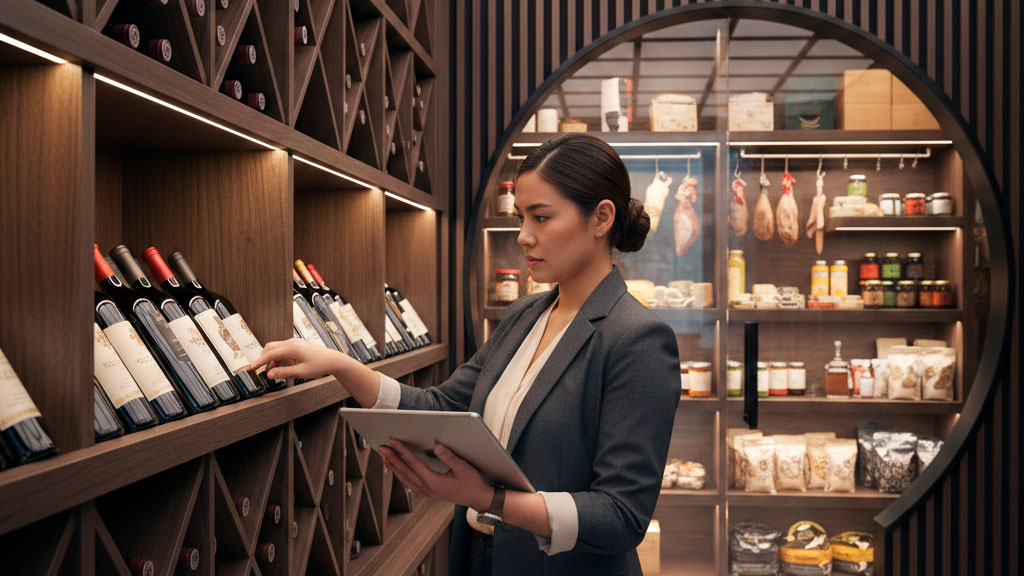
In high-standing residences, the abundance and exclusivity of assets require a level of organization that transcends simple cleaning. A home managed under criteria of excellence functions as a high-precision entity where every asset, from a vintage wine bottle to the stock of white-label products, is duly accounted for and preserved. The implementation of a “smart inventory” not only optimizes economic resources by avoiding duplicate purchases or expirations but also guarantees that the owners’ lifestyle is never interrupted by the lack of an essential detail. Filipino domestic staff, with their characteristic attention to detail and discipline, have become the ideal strategic allies to execute these wealth management methodologies.
The cellar and the pantry: management of high-end consumables
Managing food and beverages in a luxury home is not limited to filling shelves; it is a process of curation and technical monitoring that ensures freshness and immediate availability.
-
Traceability control and best-before dates.
A smart inventory begins with the FIFO methodology (First In, First Out). Qualified staff organize pantries so that products with the closest expiration dates are used first. This is vital for organic gourmet products or fresh ingredients that lack artificial preservatives. Using digital or manual records allows staff to anticipate restocking before the owner notices an absence, maintaining an invisible but constant supply flow.
-
Critical storage conditions for wines and spirits.
The wine cellar is often one of the highest-value areas of the property. Mastery in its management involves not only knowing where each label is but also monitoring environmental variables: constant humidity, absence of vibration, and a stable temperature. Filipino staff excel in maintaining these spaces, ensuring bottles are stored in the correct position to preserve the cork and performing periodic visual audits to detect any anomalies in sealing or labels.
Methodologies for the protection and registration of fixed assets
Beyond consumables, the home houses valuable assets that require rigorous cataloging for insurance, maintenance, and internal security purposes.
-
Cataloging of tableware, glassware, and silverware.
Luxury residences often have extensive collections for different types of events. A smart inventory breaks down these collections by sets, pieces, and state of conservation. Domestic staff are responsible for verifying that, after each event, the number of pieces matches the initial record. This control prevents accidental losses and allows for planned replacements with original suppliers if any piece suffers damage, maintaining the integrity of family collections.
-
The asset book: art, furniture, and technology.
A smart home requires a record of its fixed assets that includes user manuals, warranties, and technical maintenance schedules. Trusted staff act as custodians of this “Home Book,” where everything from home automation system reviews to specific cleaning treatments for artwork or designer furniture is documented. This database is fundamental for managing insurance claims and ensuring that the property’s value does not depreciate due to a lack of technical care.
-
Security and surprise inventory audits.
Trust is the pillar of domestic service, and a transparent inventory system is the best tool to strengthen it. Conducting periodic and random audits ensures that all assets are in their place. This professional practice not only protects the heritage but also professionalizes the labor relationship, establishing clear standards of responsibility over the goods that the staff are in charge of.
Technology and digitalization in modern domestic service
Smart inventory today relies on digital tools that allow for remote management and fluid communication between staff and owners.
-
Use of stock management apps and qr codes.
Many modern homes are implementing QR code labeling systems in massive storage areas. Filipino staff, highly adaptable to new technologies, use these tools to scan products when entering or leaving the pantry. This allows for the generation of automatic shopping lists that the owner can supervise from their smartphone, ensuring total transparency in domestic expenses and real home consumption.
-
Synchronization of maintenance and replenishment schedules.
The smart inventory is interconnected with the house’s calendar. For example, if the inventory detects that a specific cleaning product for marble is running low, the system can alert for the need to purchase and schedule the weekly polishing task. This integration ensures that necessary supplies are always available just before a specific task is required, optimizing the staff’s working times and the home’s efficiency.
Conclusion
Managing a luxury home requires a business approach where the inventory is the heart of the operation. At Luxury Philippines D.S. Agency, we select staff who not only understand the importance of aesthetic order but also possess the analytical capacity to manage complex inventories with rigor and honesty. A smart inventory, executed by expert hands, is the guarantee that your home will run like a Swiss watch, protecting your investment and allowing you to enjoy your time with the certainty that every detail is under control.